About Us
Crafted from high-quality jute—a renewable and compostable natural fiber—KiwiEconet’s netting is designed to meet the rigorous demands of modern farming while significantly reducing plastic waste in agriculture. Our netting not only performs effectively in the field but also decomposes naturally, enriching the soil and eliminating the burden of disposal.
At KiwiEconet, we are driven by a vision to transform agricultural practices through sustainable innovation, helping farmers transition to greener methods without compromising on quality or performance. With a strong commitment to the environment, farmer well-being, and long-term soil health, KiwiEconet is setting a new standard for responsible farming worldwide.
Meet our Inventor
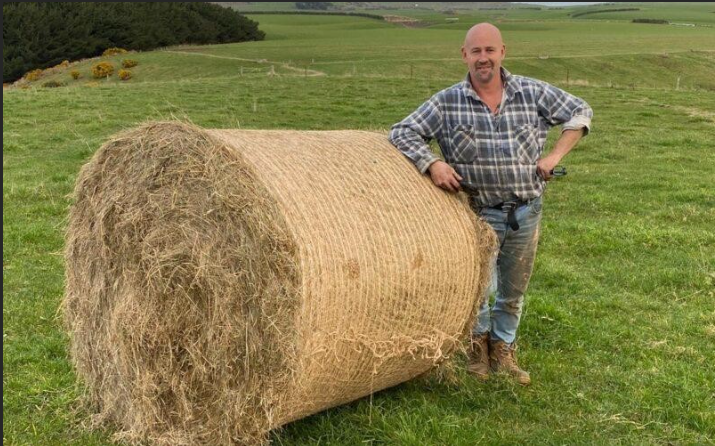
In the quiet town of Orepuki, nestled in New Zealand’s Southland region, deer farmer Grant Lightfoot embarked on a journey that would revolutionize agricultural practices. Concerned about the environmental impact of plastic bale netting—commonly used to wrap silage and hay—Lightfoot envisioned a sustainable alternative that would be safe for livestock and the planet. The inspiration struck during his tenure as a commercial diver on oil rigs. Confined to decompression chambers for extended periods, Lightfoot often reflected on his farm back home. It was during one of these introspective moments that the concept of an edible, biodegradable bale netting materialized.
Upon returning to Orepuki, Lightfoot began experimenting with natural fibers. Initially considered hemp but finally considered jute—a plant-based fiber known for its strength and biodegradability. He painstakingly hand-knitted a 50-meter prototype of the netting, dedicating weeks to the endeavor.
The breakthrough came when he tested the jute netting with a baler. It performed flawlessly, maintaining the integrity of the bale and proving to be a viable alternative to plastic netting. This innovation not only addressed environmental concerns but also eliminated the risk of livestock ingesting harmful plastics—a problem that had led to fatalities in the past.
Dubbed “Kiwi Econet,” the product garnered significant attention. In 2024, it won the open section of the Southern Rural Life Farm Innovation Awards. The recognition propelled Lightfoot into the international spotlight, attracting interest from farmers worldwide.
Grant’s journey is a story of practical innovation, resilience, and a deep commitment to sustainable farming.
Meet our Inventor
Upon returning to Orepuki, Lightfoot began experimenting with natural fibers. Initially considered hemp but finally considered jute—a plant-based fiber known for its strength and biodegradability. He painstakingly hand-knitted a 50-meter prototype of the netting, dedicating weeks to the endeavor.
The breakthrough came when he tested the jute netting with a baler. It performed flawlessly, maintaining the integrity of the bale and proving to be a viable alternative to plastic netting. This innovation not only addressed environmental concerns but also eliminated the risk of livestock ingesting harmful plastics—a problem that had led to fatalities in the past.
Dubbed “Kiwi Econet,” the product garnered significant attention. In 2024, it won the open section of the Southern Rural Life Farm Innovation Awards. The recognition propelled Lightfoot into the international spotlight, attracting interest from farmers worldwide.
Grant’s journey is a story of practical innovation, resilience, and a deep commitment to sustainable farming.
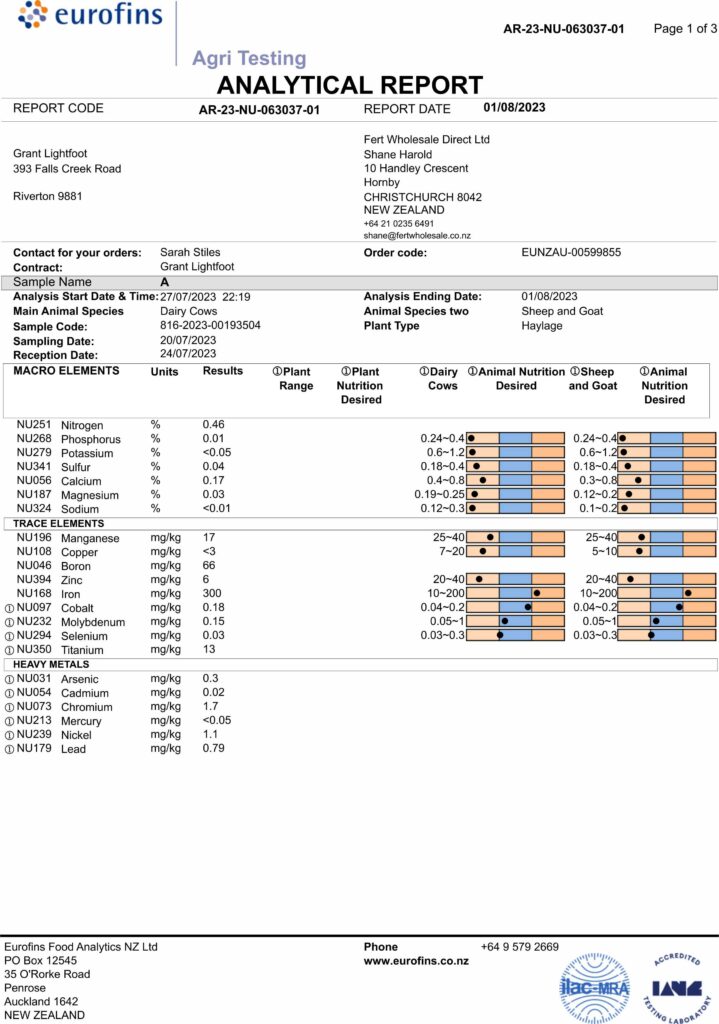
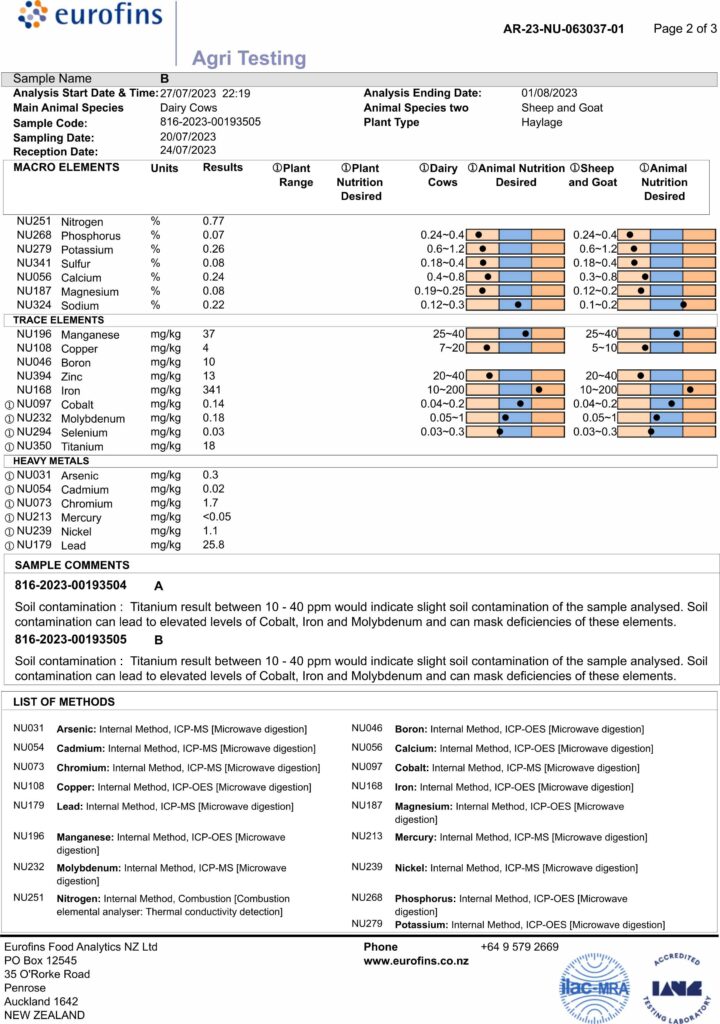
Tested and verified by EUROFINS FOOD ANALYTICS NZ LTD.
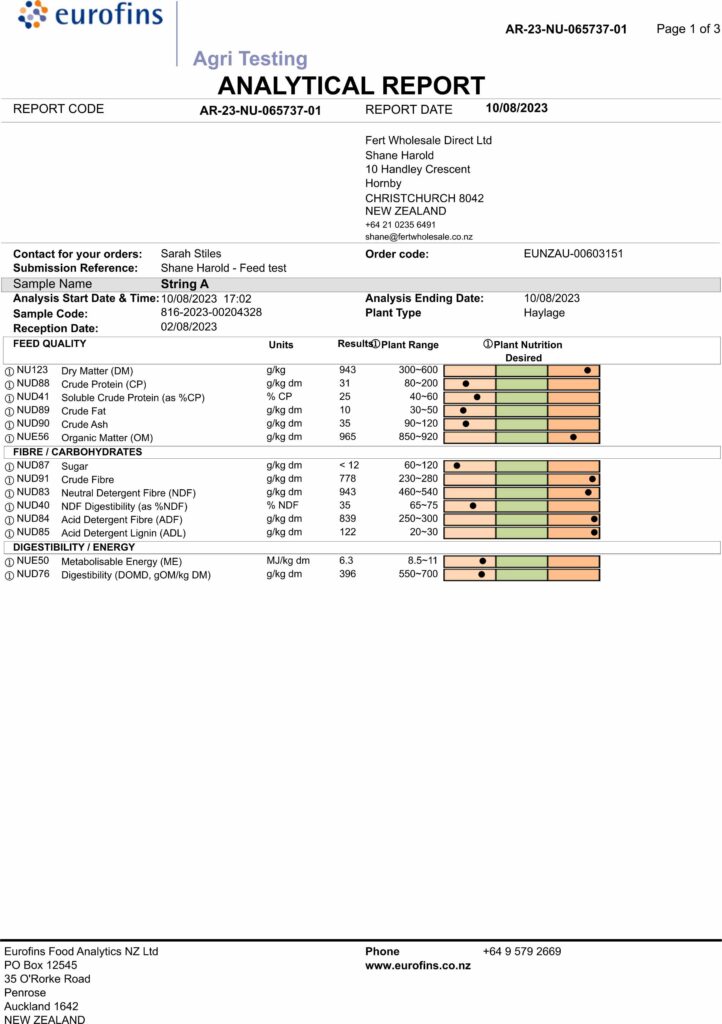
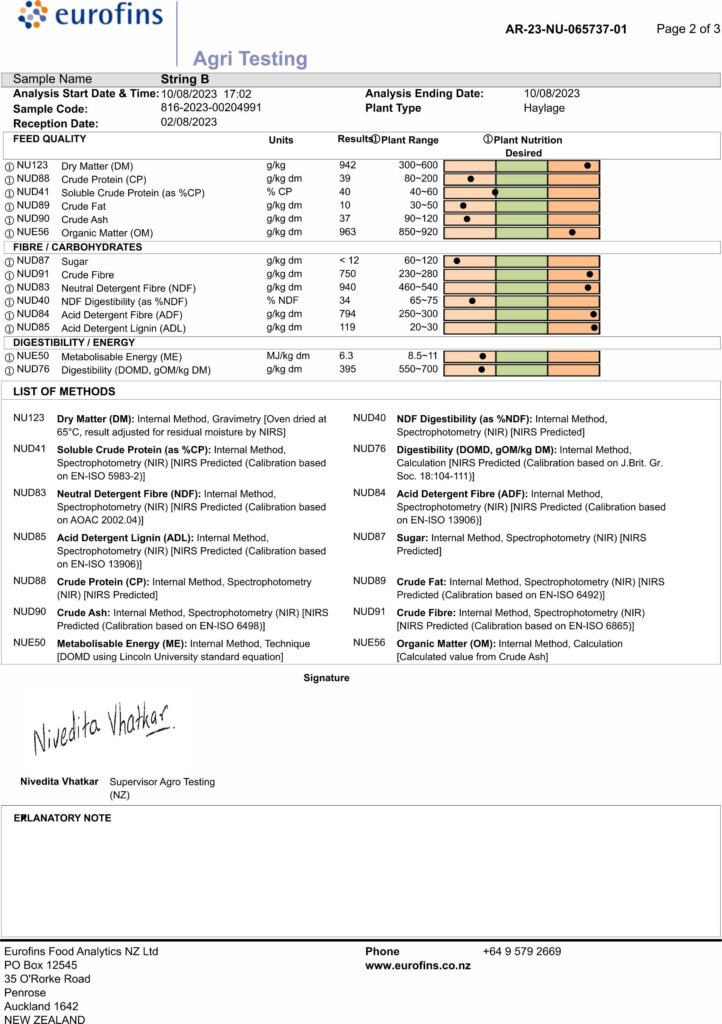
Kiwi Econet
at the forefront of sustainable agricultural
solutions.